Nexus AI Ops
AI-native operational intelligence platform featuring real-time analytics, AI copilots, and live telemetry.
Screenshots
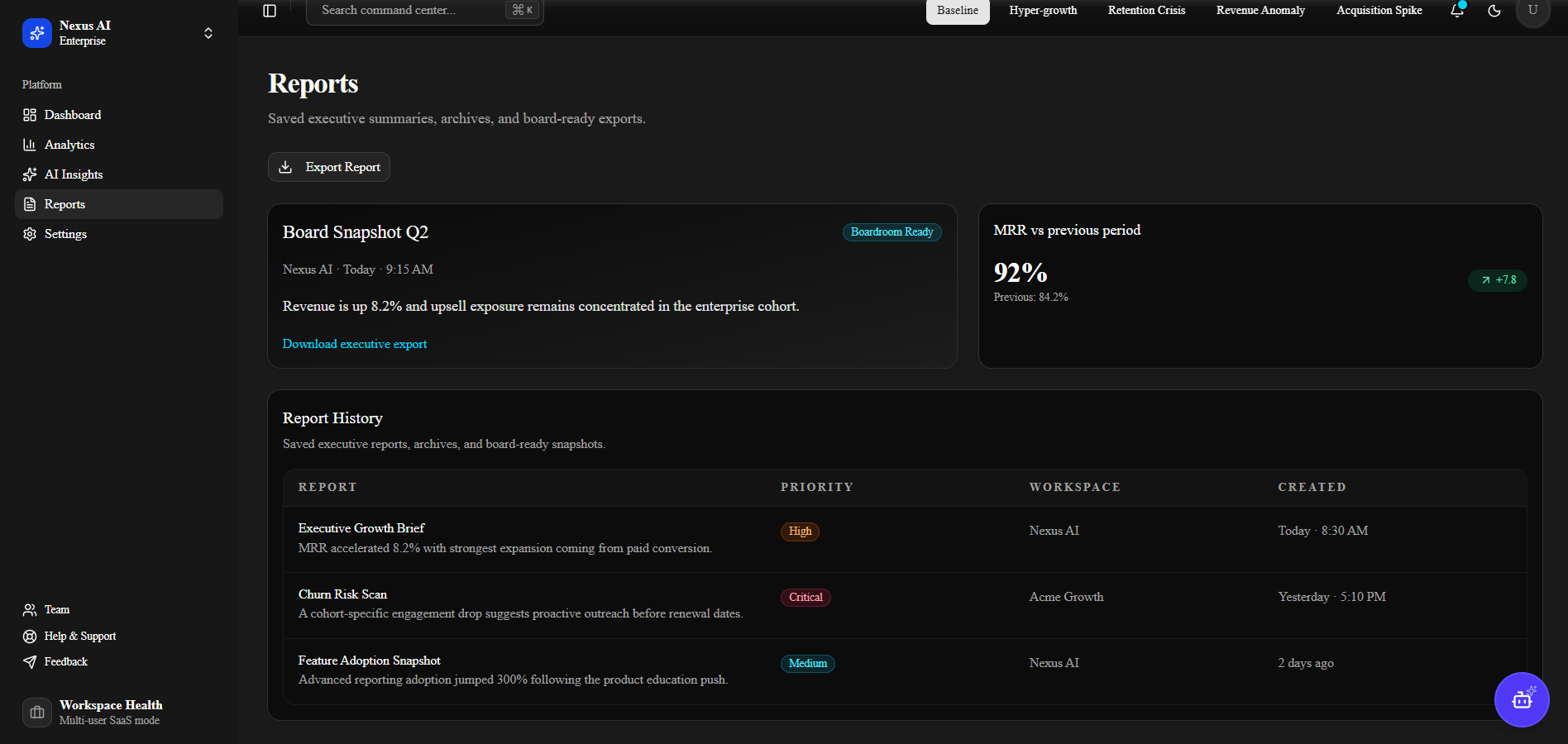
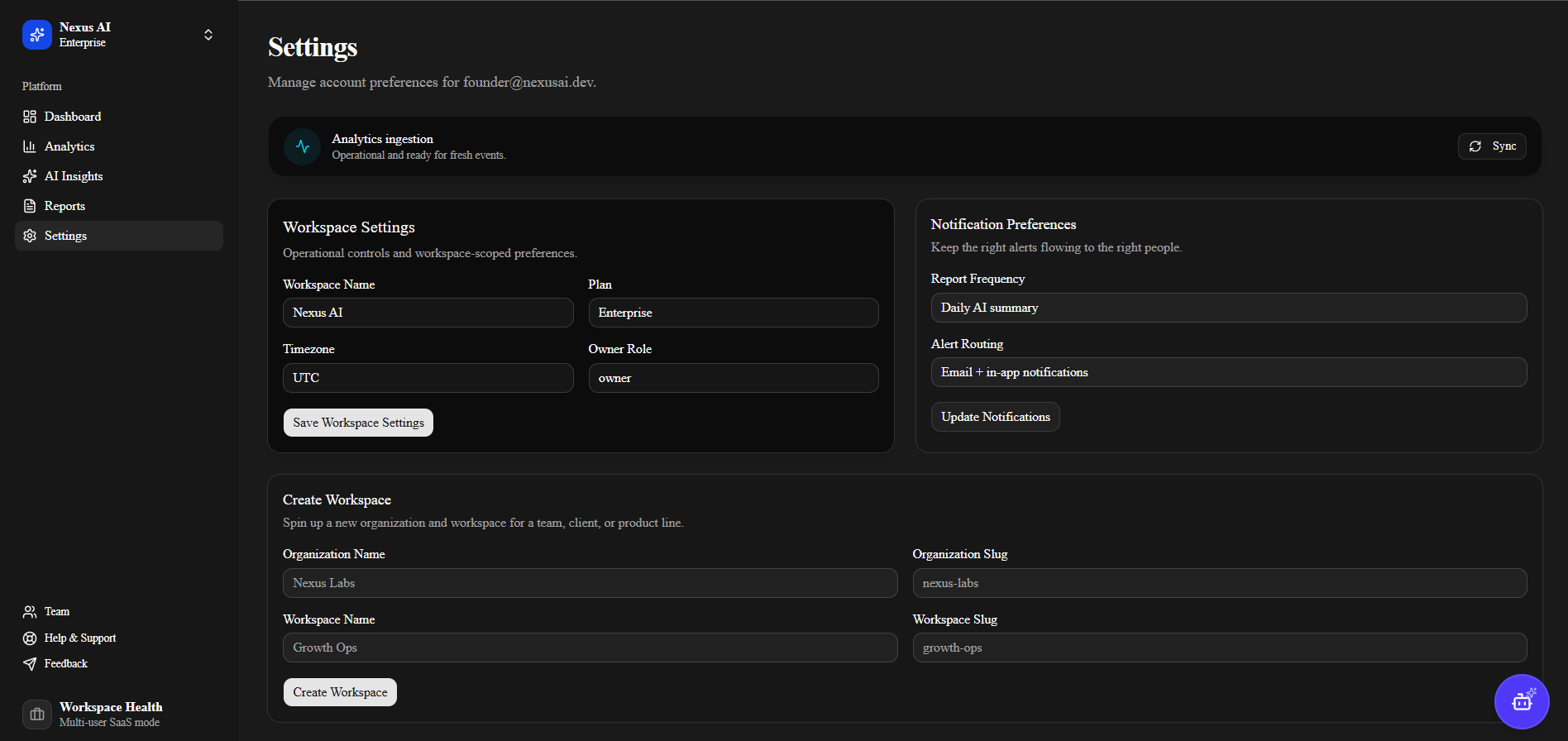
Executive Overview
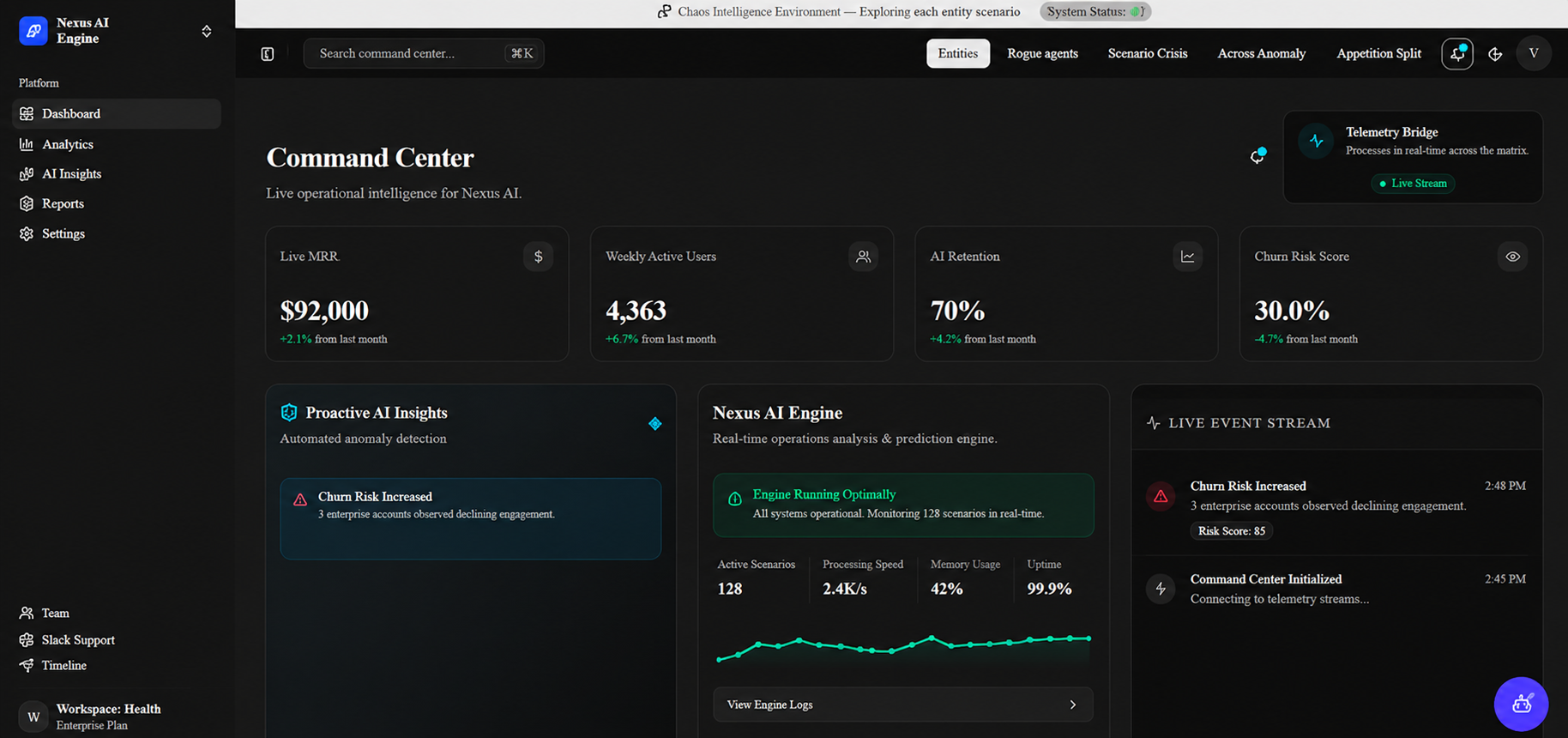
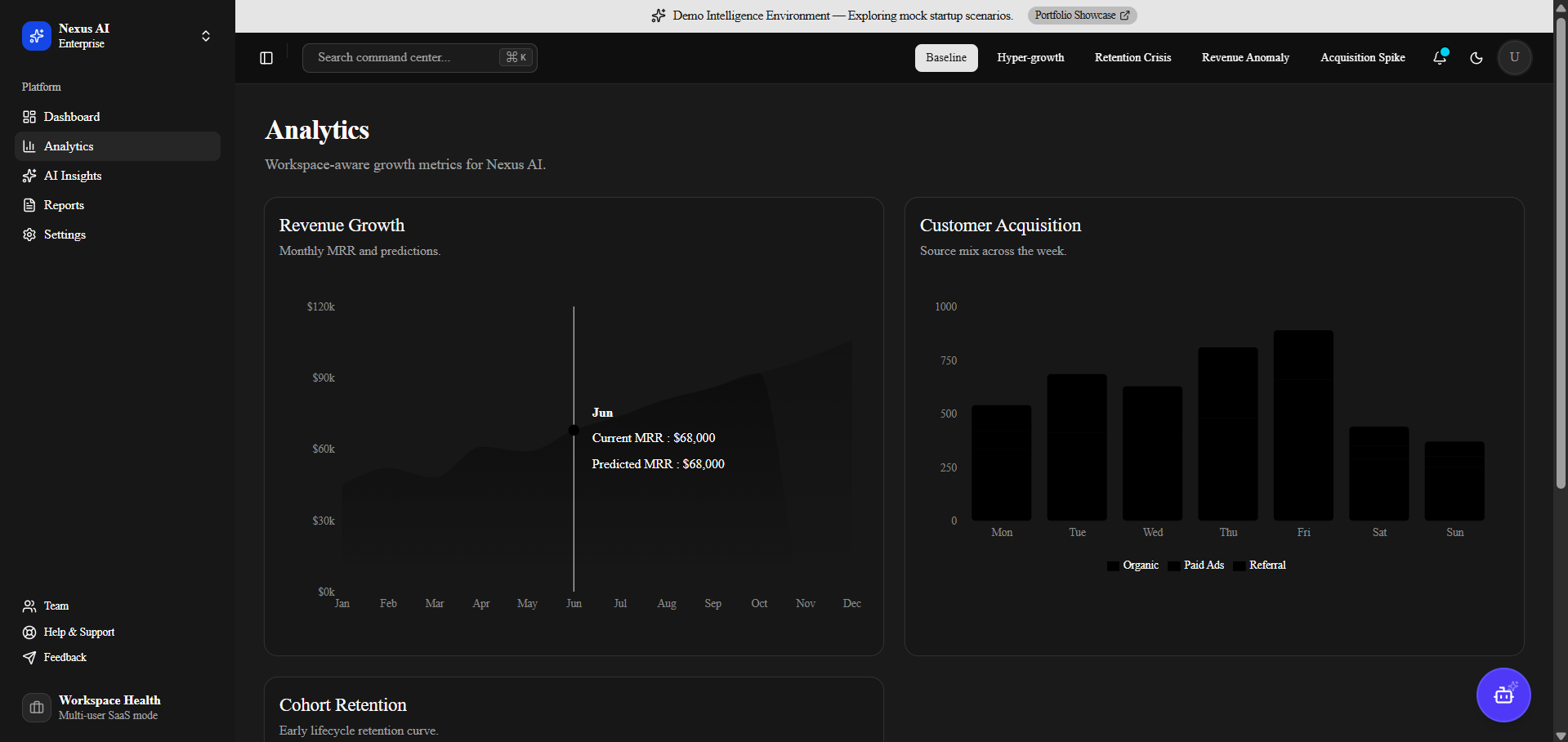
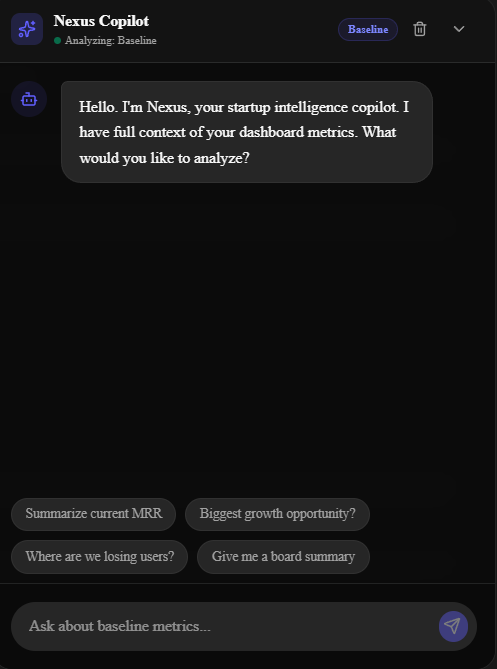
Nexus AI Ops acts as the central nervous system for scaling startups. It automatically ingests telemetry data from fragmented operational tools and provides a unified, real-time dashboard. The platform features an embedded Retrieval-Augmented Generation (RAG) copilot that translates natural language queries into complex SQL, allowing any team member to query raw business data autonomously.
The Problem
Growing startups suffer from severe data fragmentation. Customer data lives in Zendesk, revenue in Stripe, and infrastructure metrics in AWS. Non-technical founders and product managers lack a unified view of operational health and cannot query this data without pulling engineering resources away from product development to write SQL or configure BI tools.
Technical Challenge
Creating an AI agent capable of writing highly accurate SQL against a complex, normalized relational database without hallucinating column names or joining incorrect tables. Additionally, the dashboard UI needed to render hundreds of thousands of data points with zero jank or UI blocking.
Solution Architecture
The ingestion layer utilizes Python microservices running on AWS Lambda to pull webhook data from Stripe, GitHub, and Zendesk into a central Supabase PostgreSQL instance. The Next.js frontend fetches data using React Server Components for zero-bundle-size rendering of Tremor.so charts. The AI Copilot leverages a dual-agent system: a "Schema Agent" that uses pgvector to find the correct database tables/columns via semantic similarity, and a "Query Agent" that constructs and executes the SQL query.
Core Features
- Natural language to SQL generation via dual-agent LLM architecture
- Real-time, zero-latency dashboard visualizations using Tremor.so
- Automated anomaly detection utilizing statistical isolation forests
- Unified data ingestion webhooks for 10+ SaaS platforms
- Role-based access control (RBAC) with Row Level Security (RLS) in Supabase
Key Engineering Decisions
React Server Components for Data Vis
By moving all database querying and data aggregation logic into React Server Components, we avoided shipping heavy charting data payloads to the client. The browser only receives the final rendered SVG components, drastically improving Time to Interactive (TTI).
Dual-Agent SQL Generation Strategy
Instead of dumping the entire database schema into the LLM context window (which caused hallucination and context-overflow errors), we built an agent that first performs a semantic search over our schema documentation using pgvector, retrieving only the 3-4 relevant tables needed before generating the SQL.
Technology Stack
Outcomes & Impact
- Unified 5+ disparate data sources into a single, cohesive pane of glass
- Reduced engineering time spent on ad-hoc data requests by 15 hours per week
- Decreased incident detection time by 40% through automated anomaly alerts
Future Roadmap
- Transition from basic SQL generation to autonomous multi-step reasoning agents that can take action (e.g., automatically issuing refunds in Stripe based on Zendesk tickets).
- Implement WebAssembly (WASM) for client-side data slicing and cross-filtering of massive datasets without server roundtrips.
Need something similar?
We specialize in architecting custom automation systems and automation pipelines tailored to exact enterprise specifications.
Request Architectural Proposal